
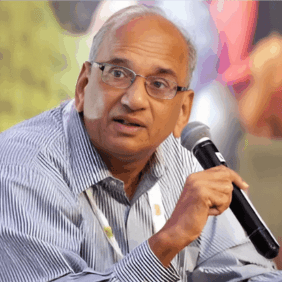
G. CHANDRASHEKHAR
Economist, Senior Editor, Policy Commentator, Commodities
Market Specialist, Independent Director on corporate boards, Independent Member, SEBI – CDAC
It is well recognized that India’s growth over the next two decades or so will be
largely driven by a variety of commodities including energy products (conventional
and non-conventional), metals (industrial, base and precious), polymers and of
course, agricultural goods.
Commodity intensity of India’s growth is inexorable. The country will continue to be
a producer, processors, consumer, exporter or importer of a wide range of
commodities; and the volumes will continue to expand. In some way, India is set to
go the China way.
Indeed, five mega trends will potentially shape and accelerate the country’s
commodity-driven growth. In this process, some commodities will gain prominence
while some will lose consumption volumes. Here’s how.
Energy Transition: India is committed to decarbonize by moving away from
polluting fossil fuels towards renewables so as to become net-zero by 2070. This
would mean the country will gradually reduce its dependence on crude oil and coal.
It is already a large producer, importer and consumer of coal. It is a modest producer
but large importer and consumer of crude oil.
As the nation moves toward renewables, composition of the basket of energy
products – the energy mix – will undergo changes. There will be a steady reduction
in import and consumption of polluting fossil fuels. At the same time, renewables –
solar energy, wind energy, nuclear energy, biofuels and so on – will gain
importance.
Transition towards renewable energy will inevitably mean more investment in
energy infrastructure for renewables which in turn would translate to higher
consumption of key materials such as steel, copper and aluminium. Demand for
these materials is sure to surge as we make progress in our energy transition
endeavor over the next several years.
Electrification: Our country will inevitably move towards greater electrification than
at present for a wide variety of economic activities including, in the main, electric
mobility. The way forward is Electric Vehicles (EVs) including cars and trucks as
well as electrified railways.
By nature, devices for electric mobility are commodity intensive, especially metals
intensive. There will be greater demand for industrial metals including steel, copper,
aluminium, nickel, cobalt, lithium, palladium and so on.
Electrification will also mean solar panels, construction of power grids and charging
infrastructure for EVs, for instance. These also will involve use of metals.
Rapid urbanization: This mega trend is something none can stop. Migration of
people from rural to urban areas mainly in search of livelihood is a global
phenomenon.
Development of urban areas would necessarily mean consumption of a range of
commodities for building urban infrastructure including residential and commercial
properties, roads, bridges, water supply, drainage and other civic amenities.
All these call for utilization of vast quantities of commodities such as steel, zinc,
aluminium, copper, cement and many more. As a thumb rule, commodities account
for as much as 70 percent of any infrastructure project cost.
Climate change: None can wish away the effect of global warming and climate
change. The world continues to witness weather aberrations like frequent droughts,
floods, hurricane, heat wave and so on. These evolving weather events not only
adversely impact human life but also hurt economic activity, damage agricultural
crops, disrupt mining and similar operations.
Adverse weather events resulting from climate change can potentially damage
agricultural crop prospects in many countries and compromise food security. So, the
world needs adaptation and mitigation measures including resilience through
climate-smart agriculture. Large amounts of research dollars are required to mitigate
the risks of climate change. The world food systems need to remain vigilant.
In our country, the challenge of land constraints and water shortage is exacerbated
by climate change. Some of our key crops like wheat and maize are at the limit of
heat tolerance. Farm sector stakeholders cannot afford to ignore the looming risk.
Resource nationalism: Given the emerging global scenario where resource rich
nations are sure to benefit from resource crunch elsewhere, one can safely expect
resource nationalism to take hold. Countries are going to exercise increased levels of
caution in releasing scarce resources such as rare earths and minerals for the world
market.
In metals and minerals, in particular, one country China dominates the existing
supply chains. Disruptions to established supply chains can throw economic activity
and investment decisions out of gear. Geopolitics often leads to supply shocks.
Dependency can quickly turn into vulnerability.
Geographic diversification is the key. Exporting countries are keen to explore new
destination markets while importing countries look for multiple sources of supply.
These five are key emerging global mega trends that stakeholders in the commodity
value chain must keep an eye on. Policymakers too have to take on board these mega
trends as plans and investments can get stymied if the emerging mega trends are not
factored in.
India cannot live in isolation. Our economy is integrating with the global economy
through the trade route and the investment route. Similarly, our domestic market is
integrating with the global market. Any development in the world can willy-nilly
impact our economy.
The point that India’s growth in the next 2-3 decades will be significantly commodity
intensive should alert policymakers to pay great attention to the sector and
encourage them to design growth-oriented and sustainable policies from a long-term
perspective.
Views are personal.